How to Select Analytics Course for Career Growth
Nearly half of all American professionals aiming for analytics roles struggle to pinpoint the right skills and training for real career advancement. Choosing an analytics course is more than checking boxes. It means mapping your goals, filling knowledge gaps, and matching your progress to fast-changing industry needs. This guide will show you how to strategically evaluate options so your learning leads to practical growth and concrete results in the competitive analytics job market.
Table of Contents
- Step 1: Define Your Career And Skill Goals
- Step 2: Research Available Analytics Courses
- Step 3: Compare Course Content And Certification Value
- Step 4: Assess Instructor Expertise And Learning Format
- Step 5: Verify Industry Relevance And Alumni Outcomes
Quick Summary
| Key Point | Explanation |
|---|---|
| 1. Set Clear Career Goals | Identify your professional aspirations and current skills to guide your analytics training selection. |
| 2. Research Course Offerings | Evaluate various analytics programs thoroughly to ensure they align with your defined career objectives. |
| 3. Assess Certification Value | Investigate the recognition and impact of course certifications on your career advancement potential. |
| 4. Evaluate Instructors | Analyze instructor backgrounds to ensure they possess relevant industry expertise and teaching efficacy. |
| 5. Check Alumni Success | Investigate graduates’ career progress and outcomes to gauge the program’s real-world effectiveness. |
Step 1: Define Your Career and Skill Goals
Selecting an analytics course requires strategic planning around your unique professional trajectory. Your goal is to map out precise career objectives that align with your current skills, industry interests, and long term professional aspirations.
Start by conducting a comprehensive self assessment of your current analytical capabilities. Identify specific technical competencies you already possess and pinpoint skill gaps preventing career advancement. Ask yourself critical questions like: What industry sectors fascinate me? Where do my current technical skills intersect with emerging market demands? Which analytical tools am I proficient in versus areas needing development?
Creating a targeted skill development roadmap means being brutally honest about your professional starting point. Map out progression milestones that transform your current profile into your desired analytics professional identity. This might involve specializing in specific domains like financial analytics, healthcare data science, or machine learning applications. Research potential career paths thoroughly and select courses that provide practical, industry aligned training matching your strategic objectives.
Pro Tip: Document your skill progression journey. A living skills matrix tracking your technical growth can help you stay motivated and provide crystal clear visibility into your professional development trajectory.
Next, you will explore matching your defined goals with appropriate analytics training programs that precisely match your identified skill requirements.
Step 2: Research Available Analytics Courses
Researching analytics courses is a critical step in your professional development journey that requires strategic exploration and careful evaluation. Your objective is to identify training programs that align precisely with your career goals and provide practical skill development.
Begin by examining comprehensive course offerings that cover core business intelligence skills including technical tools like Excel and Power BI. Look beyond surface level course descriptions and dig deep into curriculum details. Evaluate each program based on multiple factors: instructor expertise, practical project opportunities, industry recognition, and alignment with your specific career trajectory. Pay close attention to course modules that offer hands on training in analytical tools and techniques relevant to your target industry.

Quality research means going beyond course descriptions. Reach out to program alumni, attend information sessions, and request detailed syllabi that outline specific learning outcomes. Connect with professional networks on platforms like LinkedIn to gather insights about different analytics training programs. Compare course structures, understand the depth of technical training provided, and assess how each program can bridge your current skill gaps.
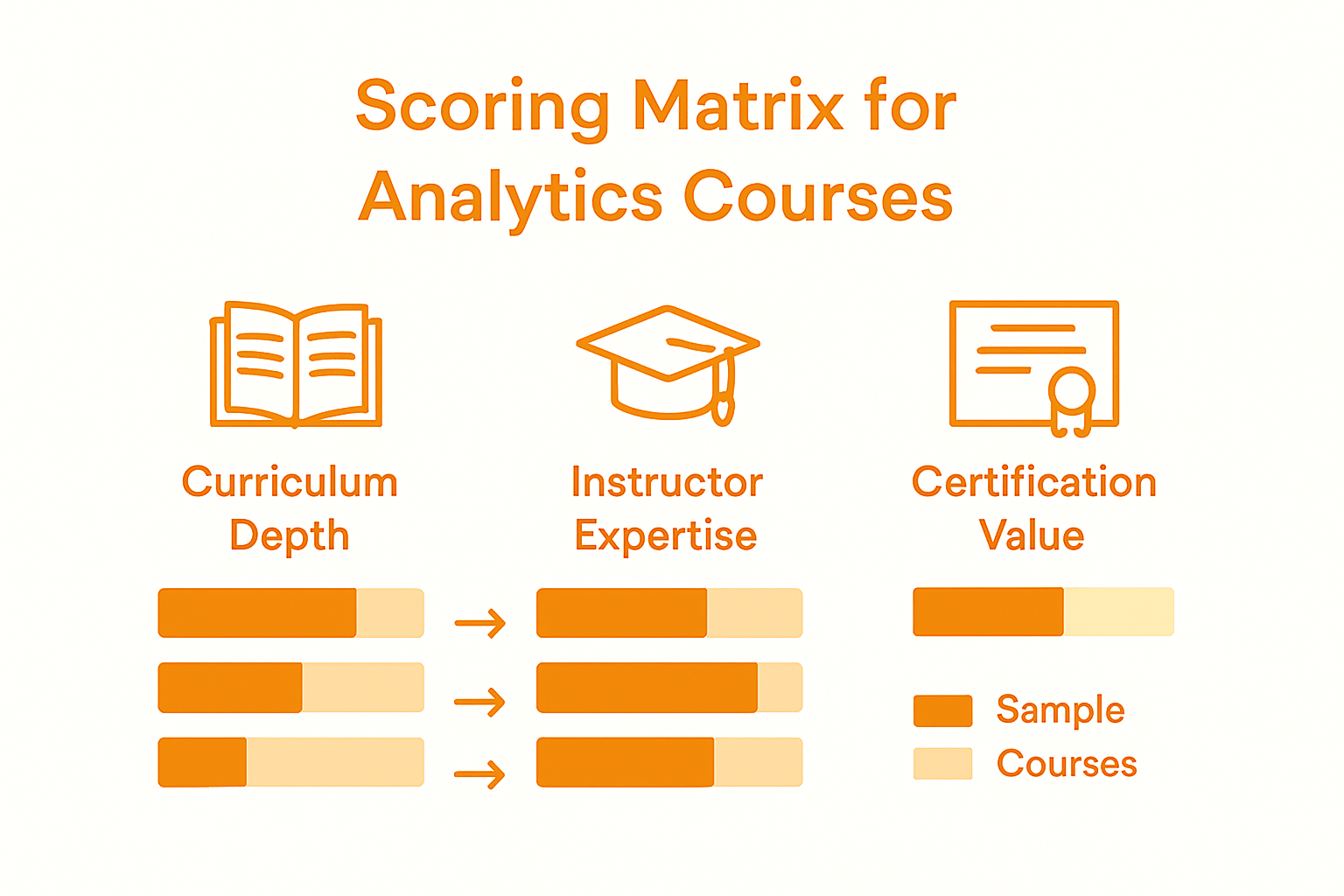
Pro Tip: Create a detailed comparison matrix tracking key course attributes such as curriculum depth, instructor credentials, practical project opportunities, and potential industry certifications.
Next, you will evaluate and compare the most promising analytics courses to determine which best matches your defined career and skill goals.
Step 3: Compare Course Content and Certification Value
Comparative analysis of analytics course content and certification value requires a systematic approach to evaluate potential professional development opportunities. Your goal is to identify training programs that not only match your skill requirements but also provide recognized credentials that enhance your market value.
Start by scrutinizing the curriculum details, paying special attention to professional certifications that validate your analytical expertise such as the Certified Analytics Professional (CAP). Assess each course based on comprehensive criteria including technical depth, industry recognition, practical skill application, and potential career advancement opportunities. Examine the specific learning outcomes, tools covered, and the alignment of course modules with current industry standards and technological trends in data analytics.
Beyond surface level course descriptions, dig deeper into the certification value. Research the reputation of issuing institutions, verify the industry acceptance of the credentials, and understand how specific certifications can differentiate you in the competitive analytics job market. Consider factors like employer recognition, the breadth of skills demonstrated by the certification, and potential salary increments associated with advanced credentials.
Pro Tip: Create a detailed scoring matrix that objectively evaluates each course and certification across multiple dimensions including curriculum comprehensiveness, instructor expertise, practical project opportunities, and long term career impact.
Next, you will narrow down your options and prepare to make an informed decision about the most suitable analytics training program for your professional growth.
Step 4: Assess Instructor Expertise and Learning Format
Selecting the right analytics course demands careful evaluation of instructor credentials and learning delivery methods that align with your professional development strategy. Your objective is to identify training programs featuring expert instructors who can effectively transform complex analytical concepts into practical skills.
Begin by thoroughly investigating instructor backgrounds, focusing on comprehensive course offerings led by industry experienced professionals like Robin Hunt, who bring real world expertise to their teaching. Examine each instructor’s professional credentials, academic background, current industry engagement, and practical experience in data analytics. Look beyond academic qualifications to understand their actual implementation experience, consulting work, and current involvement in analytical projects that demonstrate current technological competencies.
Carefully assess the learning format to ensure it matches your personal learning style and professional constraints. Consider multiple delivery options including online self paced courses, live virtual training, hybrid models, and in person workshops. Evaluate each format based on flexibility, interaction opportunities, hands on practice potential, and alignment with your work schedule. Prioritize programs offering interactive learning experiences that provide direct engagement with instructors, opportunities for practical project work, and mechanisms for real time feedback and skill validation.
Pro Tip: Request sample lecture recordings or attend free preview sessions to personally evaluate the instructor’s teaching style, communication clarity, and ability to break down complex analytical concepts into understandable segments.
Next, you will develop a comprehensive understanding of how different learning formats can impact your skill acquisition and professional growth trajectory.
Step 5: Verify Industry Relevance and Alumni Outcomes
Validating the real world impact of an analytics course requires a comprehensive investigation into its industry alignment and graduate success metrics. Your mission is to uncover concrete evidence that demonstrates how the training program translates into tangible career advancement opportunities.
Begin by analyzing course recommendation systems that align with current industry skills requirements, focusing on programs that dynamically map training content to emerging technological trends. Examine the curriculum through the lens of current job market demands, paying close attention to how well the course addresses specific role profiles and competency requirements across different analytical career paths. Look for training programs that provide clear documentation of graduate placement rates, salary improvements, and career trajectory transformations.
Deep dive into alumni networks and outcomes by conducting thorough research beyond surface level marketing materials. Connect with program graduates through professional networking platforms, attend alumni information sessions, and request detailed placement statistics. Evaluate the credibility of the program by tracking the career progression of recent graduates, understanding their job roles, industry sectors, and professional achievements post course completion. Pay special attention to how graduates have leveraged the specific skills acquired during the training to unlock new career opportunities.
Pro Tip: Create a systematic tracking document that compares alumni outcomes across different training programs, noting specific metrics like job placement rates, average salary increases, and career advancement timelines.
Next, you will synthesize all gathered information to make an informed decision about the most promising analytics training program for your professional development.
Accelerate Your Analytics Career with Expert Training in Dubai
Choosing the right analytics course is essential to overcome skill gaps and align your learning with career goals in data-driven industries. If mastering practical tools, gaining industry-recognized certifications, and learning from seasoned professionals are your objectives, then customized in-person training can transform your career trajectory. The challenge of matching course content with real-world demands becomes simpler when you have access to focused programs designed for professionals eager to thrive in Artificial Intelligence and Data Science fields.
Discover how Ambeone’s training programs address the exact needs highlighted in “How to Select Analytics Course for Career Growth.” Our offerings provide comprehensive course structures and impactful workshops led by expert faculty. Explore our Uncategorized Archives – Ambeone to see detailed course insights and success stories. Start your journey today and gain industry-relevant skills with proven outcomes. Visit Ambeone to unlock new career possibilities tailored to the evolving analytics landscape.
Frequently Asked Questions
How do I define my career and skill goals for selecting an analytics course?
To define your career and skill goals, start by conducting a self-assessment of your current analytical skills and identifying gaps. Write down specific career objectives that align with your interests and industry demands.
What should I research when looking for analytics courses?
When researching analytics courses, examine the course offerings, curriculum details, and industry relevance. Create a comparison matrix to track key attributes such as instructor expertise, practical project opportunities, and certification value.
How can I evaluate the certification value of an analytics course?
To evaluate the certification value, analyze the reputation of the issuing institution and seek information on industry acceptance of their credentials. Consider how the certification may impact your job prospects and earning potential.
Why is instructor expertise important in choosing an analytics course?
Instructor expertise is important because experienced instructors can provide real-world insights and practical skills that enhance your learning. Verify their professional credentials and look for opportunities to engage with them directly through lectures or sessions.
What should I look for regarding alumni outcomes from an analytics course?
Look for metrics such as job placement rates and salary improvements among alumni. Connect with graduates to understand their career advancements and how they leveraged the skills gained from the course.
How can I find the right learning format for my analytics course?
To find the right learning format, evaluate whether online, in-person, or hybrid models suit your personal learning style. Assess the flexibility of schedules and opportunities for interactive learning to ensure effective skill acquisition.
Recommended
- Applied Analytics Training Guide for Career Advancement – Ambeone
- 7 Types of Analytics Courses for Career Growth in UAE – Ambeone
- How to Implement Analytics Training for Real Impact – Ambeone
- Data Analytics Career Roadmap: Step-by-Step Guide to Success
- Understanding Music Marketing Analytics Explained – Blog – Music24.com
- Unlock Your Potential: Explore Top Cannabis Courses Online