Over 97 percent of United Arab Emirates residents now use artificial intelligence in daily life, a figure that even surpasses most American cities. In a rapidly changing landscape, professionals and organizations across the UAE face new opportunities and challenges as AI becomes central to government, business, and education. Understanding AI’s real impact, key applications, and practical skill demands can help you make informed decisions and remain competitive in one of the most tech-forward economies worldwide.
Table of Contents
- Defining AI and Its Impact in UAE
- Major AI Applications Across UAE Industries
- AI Skill Requirements for UAE Professionals
- Key Risks and Ethical Concerns in UAE AI
- Upskilling and Corporate AI Training Demands
Key Takeaways
| Point | Details |
|---|---|
| AI Adoption in UAE | 97% of UAE residents utilize AI technologies, highlighting the nation’s commitment to technological integration and digital transformation. |
| Diverse AI Applications | Key sectors such as finance, healthcare, and government are leveraging AI for enhanced efficiency and innovation. |
| Skill Development Necessity | Professionals must cultivate both technical and soft skills to remain competitive in the AI-driven economy. |
| Ethical Challenges | 53% of respondents see AI benefits outweigh risks, but 57% call for robust regulation to address ethical concerns. |
Defining AI and Its Impact in UAE
Artificial Intelligence (AI) represents a groundbreaking technological paradigm that transforms how businesses and professionals operate, particularly in forward-thinking regions like the United Arab Emirates. Artificial Intelligence is a sophisticated computational system capable of learning, adapting, and performing tasks that traditionally required human intelligence.
The UAE has positioned itself as a global leader in AI adoption, with 97% of residents utilizing AI technologies for work, study, and personal purposes. This extraordinary statistic underscores the nation’s commitment to technological integration and digital transformation. From government services to private sector innovations, AI is becoming a fundamental driver of progress across multiple domains.
In the governmental landscape, Dubai has been particularly proactive. The inaugural Dubai State of AI Report highlights over 100 high-impact AI implementations across critical sectors like urban planning, healthcare, and finance. These applications demonstrate how AI is not just a technological trend, but a strategic tool for enhancing efficiency, decision-making, and service delivery.
Key AI applications in the UAE encompass several critical areas:
- Predictive Analytics: Enabling data-driven strategic planning
- Automation: Streamlining complex business processes
- Machine Learning: Developing intelligent systems that continuously improve
- Natural Language Processing: Enhancing communication and customer interaction
Professionals across industries are recognizing that understanding and leveraging AI is no longer optional but essential for remaining competitive in the rapidly evolving digital economy.

Major AI Applications Across UAE Industries
The United Arab Emirates is rapidly emerging as a global hub for artificial intelligence implementation, with transformative applications spanning multiple critical industries. From finance to government services, AI technologies are reshaping operational strategies and creating unprecedented opportunities for innovation and efficiency.
49% of UAE organizations plan to deploy AI in finance functions, focusing specifically on complex domains like accounting, financial planning, and sophisticated risk assessment. This strategic integration represents a significant shift towards data-driven decision making, enabling financial institutions to leverage predictive analytics and automated processes.
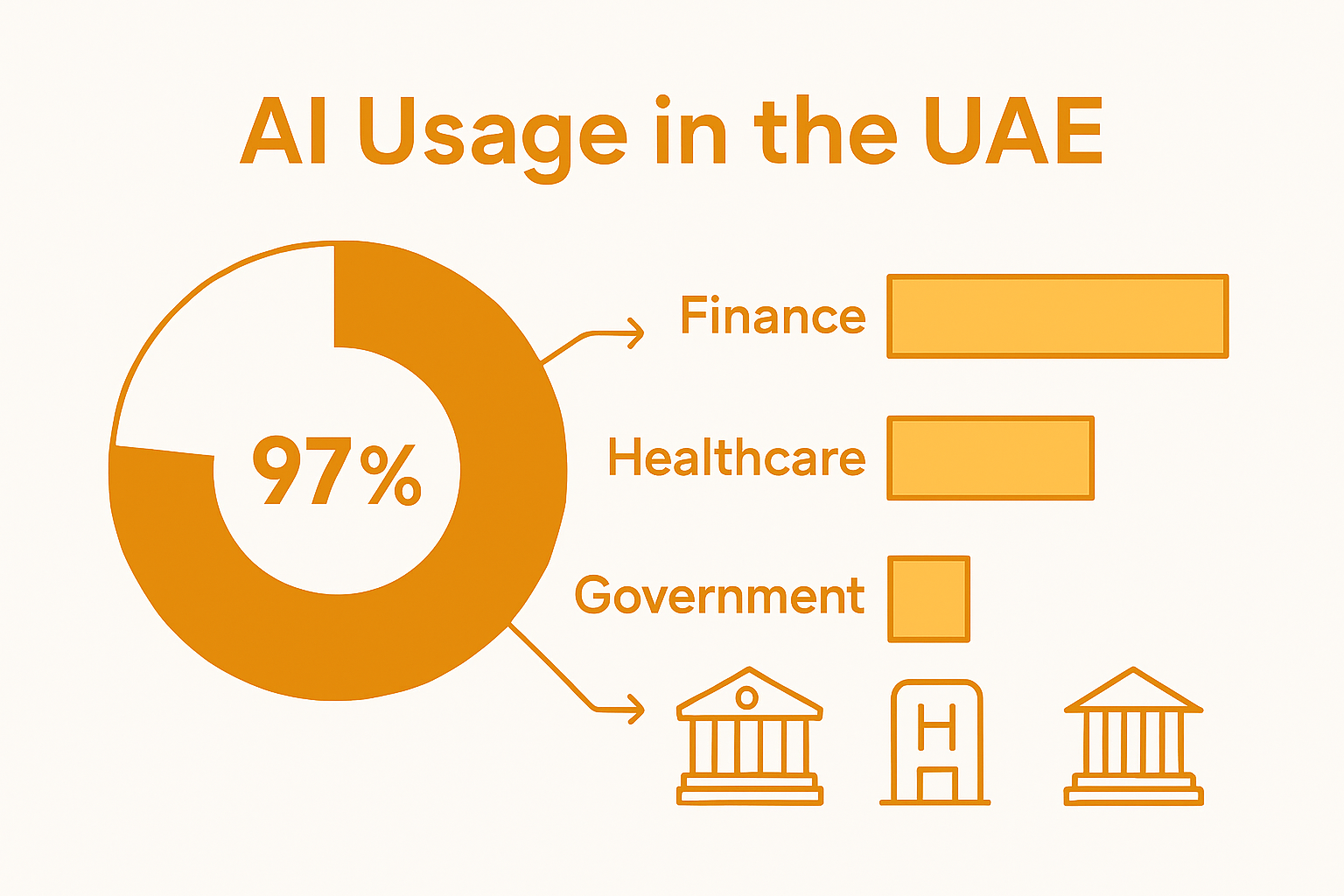
In the public sector, AI adoption is equally impressive. 94% of Dubai government employees support generative AI implementation in government operations, signaling a remarkable cultural openness to technological transformation. Key industry applications include:
Primary AI Applications Across Industries:
- Finance: Fraud detection, risk management, algorithmic trading
- Healthcare: Diagnostic imaging, predictive patient care, medical research
- Government: Process automation, citizen service optimization, policy planning
- Real Estate: Property valuation, market trend prediction, investment analysis
- Transportation: Autonomous vehicle development, traffic management, logistics optimization
These AI implementations are not just technological experiments but strategic investments that position the UAE as a global leader in digital transformation. Professionals across sectors are rapidly recognizing that understanding and integrating AI capabilities is no longer optional but essential for maintaining competitive advantage in an increasingly digital global economy.
AI Skill Requirements for UAE Professionals
As artificial intelligence continues to reshape professional landscapes, UAE professionals must develop a comprehensive and strategic skill set to remain competitive in an increasingly digital economy. A systematic literature review highlights the critical need for AI competencies, particularly in public sector implementation, underscoring the importance of targeted skill development.
Core Technical AI Skills that professionals must cultivate include:
- Programming Languages: Python, R, SQL
- Machine Learning Frameworks: TensorFlow, PyTorch
- Data Analysis Tools: Pandas, NumPy
- Cloud Computing Platforms: AWS, Google Cloud, Microsoft Azure
KPMG’s report indicates that the UAE is actively advancing AI training and literacy, revealing a significant majority of residents experiencing tangible AI benefits. This trend emphasizes the importance of developing both technical and soft skills necessary for effective AI integration.
Soft Skills for AI Professionals:
- Critical thinking and complex problem solving
- Adaptability and continuous learning
- Ethical decision making
- Cross-functional communication
- Data storytelling and visualization
Professionals must recognize that AI skill development is not a one-time achievement but an ongoing journey of continuous learning and adaptation. Success in the AI-driven workplace requires a holistic approach that combines technical proficiency with strategic thinking and innovative mindset.
Key Risks and Ethical Concerns in UAE AI
As artificial intelligence becomes increasingly integrated into professional and personal domains, the United Arab Emirates faces critical challenges in balancing technological innovation with ethical considerations. KPMG’s report reveals a nuanced perspective, with 53% of UAE respondents believing AI benefits outweigh potential risks, while 57% simultaneously advocate for robust AI regulation, highlighting the complex ethical landscape.
Primary Ethical Risks in AI Adoption:
- Data Privacy: Protecting individual and organizational information
- Algorithmic Bias: Ensuring fair and unbiased decision making
- Transparency: Maintaining clear understanding of AI decision processes
- Accountability: Establishing responsible frameworks for AI outcomes
A government study underscores workforce concerns, with 55% of Dubai government employees expressing anxiety about potential job displacement, emphasizing the human impact of AI technological advancement. This statistic reveals that while technological progress is inevitable, the social and economic implications demand careful, empathetic navigation.
Key Mitigation Strategies:
- Comprehensive AI ethics training
- Transparent AI governance frameworks
- Continuous skill reskilling programs
- Collaborative human-AI work models
Successful AI integration in the UAE requires a holistic approach that balances technological potential with human-centric considerations. Organizations and professionals must proactively address ethical challenges, transforming potential risks into opportunities for responsible innovation.
Upskilling and Corporate AI Training Demands
59% of UAE organizations are actively planning or implementing AI pilot projects, signaling an unprecedented demand for strategic AI skill development across corporate environments. This substantial percentage highlights the critical need for comprehensive, targeted training programs that can rapidly upskill professionals to meet emerging technological challenges.
Core Corporate AI Training Focus Areas:
Technical Competencies:
- Machine learning fundamentals
- Programming skills
- Data analytics
- Cloud computing technologies
Strategic Capabilities:
- AI project management
- Ethical AI implementation
- Cross-functional AI integration
- Business process optimization
Research emphasizes the necessity for tailored AI training programs addressing the unique requirements of public sector environments, indicating that one-size-fits-all approaches are insufficient for effective technological transformation. Organizations must design specialized training curricula that align with specific industry contexts and strategic objectives.
Recommended Training Strategies:
- Implement modular, flexible learning pathways
- Combine theoretical knowledge with practical applications
- Develop continuous learning ecosystems
- Create mentorship and peer learning networks
Successful corporate AI training transcends traditional skill acquisition. It requires a holistic approach that cultivates adaptability, critical thinking, and a forward-looking technological mindset among professionals across all organizational levels.
Empower Your Career with Expert AI Training in UAE
The rapid rise of Artificial Intelligence in the United Arab Emirates presents both exciting opportunities and significant challenges for professionals seeking to stay competitive. With AI technologies transforming industries such as finance, healthcare, and government services, mastering key skills like predictive analytics, machine learning, and ethical AI implementation is crucial. Many professionals face uncertainty about how to adapt and thrive in this evolving landscape where continuous learning and practical expertise determine success.
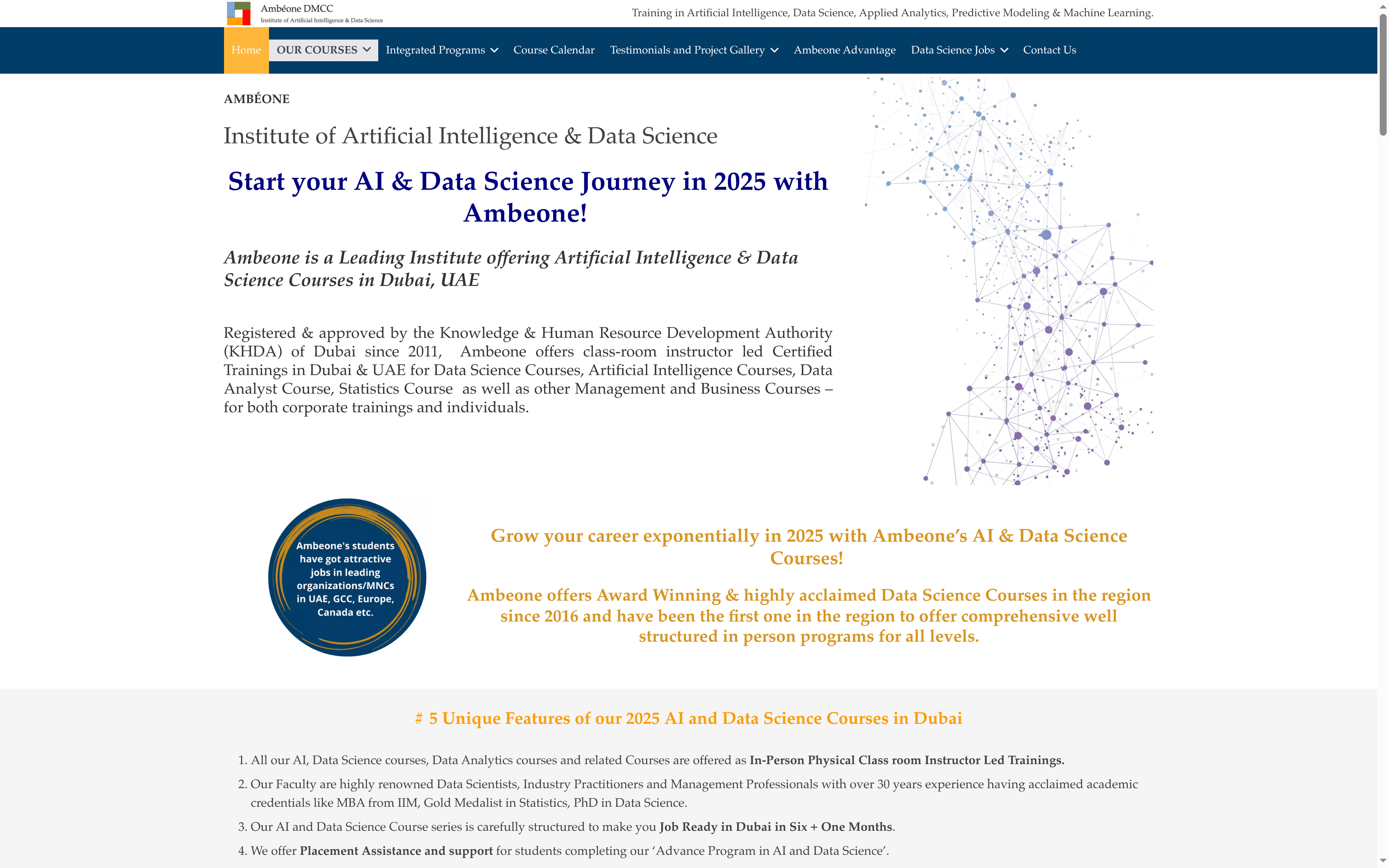
Take control of your career transformation by enrolling in world-class AI and Data Science courses offered at Ambeone. Our KHDA-approved, in-person, instructor-led programs are designed specifically for UAE professionals aiming to develop industry-relevant skills in Python programming, data analytics, AI frameworks, and ethical decision-making. Whether you want to enhance your current role or make a full career switch, our comprehensive training, certifications, and corporate workshops provide the tools you need right now. Discover how to turn AI challenges into opportunities for growth by visiting Ambeone’s landing page and start your journey today.
Frequently Asked Questions
How is AI transforming careers in the UAE?
AI is reshaping careers in the UAE by necessitating the development of new skill sets that include technical competencies like programming and data analysis, as well as soft skills like critical thinking and adaptability. Professionals must continuously learn and integrate AI technologies to remain competitive in their fields.
What are the key sectors in the UAE where AI is being implemented?
Key sectors in the UAE utilizing AI include finance, healthcare, government services, real estate, and transportation. AI applications in these industries range from predictive analytics and automation to fraud detection and autonomous vehicle development.
What skills should professionals focus on developing to thrive in an AI-driven workplace?
Professionals should focus on cultivating core technical skills such as programming languages (Python, R), machine learning frameworks (TensorFlow, PyTorch), and data analysis tools. Additionally, developing soft skills like problem-solving, adaptability, and ethical decision-making is crucial.
What are the primary ethical concerns associated with AI in the UAE?
Primary ethical concerns include data privacy, algorithmic bias, transparency in AI decision-making, and accountability for AI outcomes. Addressing these risks requires comprehensive ethics training, transparent governance frameworks, and continuous reskilling efforts.
Recommended
- 7 Key AI Training Advantages in UAE for Career Growth – Ambeone
- Why Choose AI as a Career: Complete Guide – Ambeone
- Why AI in Dubai: The Definitive Guide – Ambeone
- Artificial Intelligence Training Dubai | Ambeone
- 7 Key EdTech Trends in 2025 for Malaysian Innovators – Projector Display