
Why train in AI? This comprehensive guide explains core concepts, training benefits, real-world applications, and essential considerations for professionals.
Why Train in AI: The Essential Guide
Why Train in AI: The Essential Guide
Over 80 percent of american organizations are now prioritizing artificial intelligence skills to stay ahead in a competitive global market. As AI reshapes everything from healthcare delivery to financial systems, understanding its core concepts and training pathways becomes crucial for both individuals and businesses. This guide uncovers how mastering foundational AI skills opens new career doors, highlights what modern training involves, and shows how professionals can harness AI’s transformative power across various industries.
Table of Contents
- Defining AI Training And Core Concepts
- Types Of AI Training Programs Available
- Career Advantages Of AI Skill Development
- Key Business Applications Across Industries
- Practical Considerations And Common Challenges
Key Takeaways
| Point | Details |
|---|---|
| AI Training Fundamentals | AI training involves understanding key concepts such as perception, representation and reasoning, learning, natural interaction, and social impact to develop intelligent technologies effectively. |
| Diverse Training Programs | Professionals can choose from various AI training programs, including academic certifications, professional development courses, corporate workshops, online courses, and specialized bootcamps tailored to different needs and skill levels. |
| Career Advantages | Developing AI skills can lead to higher salaries, industry versatility, innovation leadership, and global career opportunities across multiple sectors, enhancing job market competitiveness. |
| Common Challenges | Key challenges in AI include data quality, ethical implications, technical complexity, and maintaining security and privacy, necessitating a comprehensive understanding for effective implementation. |
Defining AI Training and Core Concepts
Artificial Intelligence (AI) training represents a comprehensive process of educating professionals and systems to understand, develop, and implement intelligent technologies. According to the Association for the Advancement of Artificial Intelligence, AI training encompasses five central concepts: perception, representation and reasoning, learning, natural interaction, and social impact.
These foundational concepts serve as the building blocks for understanding how AI systems process information, make decisions, and interact with human environments. Perception involves how AI recognizes and interprets sensory data, while representation and reasoning focuses on how machines construct logical frameworks for understanding complex information. Learning becomes the critical mechanism through which AI systems improve performance by analyzing patterns, adapting strategies, and refining decision-making processes.
A groundbreaking competency-based model from ArXiv Research further expands our understanding by outlining twelve essential skills necessary for generative AI literacy. These competencies range from foundational AI knowledge to advanced capabilities like:
- Prompt engineering techniques
- Programming skills
- Ethical decision making
- Legal and regulatory comprehension
- Technical system understanding
Professionals seeking to train in AI must recognize that this field is not just about technical prowess, but also about developing a nuanced understanding of how intelligent systems interact with human contexts. By mastering these core concepts, individuals can position themselves at the forefront of technological innovation, ready to tackle complex challenges across multiple industries.
For professionals interested in a deeper exploration of AI principles, our guide on why use artificial intelligence provides comprehensive insights into the transformative potential of these technologies.
Types of AI Training Programs Available
Artificial Intelligence training programs have evolved dramatically, offering diverse pathways for professionals seeking to enter this dynamic field. Stanford University exemplifies cutting-edge AI education with its comprehensive 10-week online specialization that covers critical domains such as machine learning, deep learning, natural language processing, reinforcement learning, and computer vision.
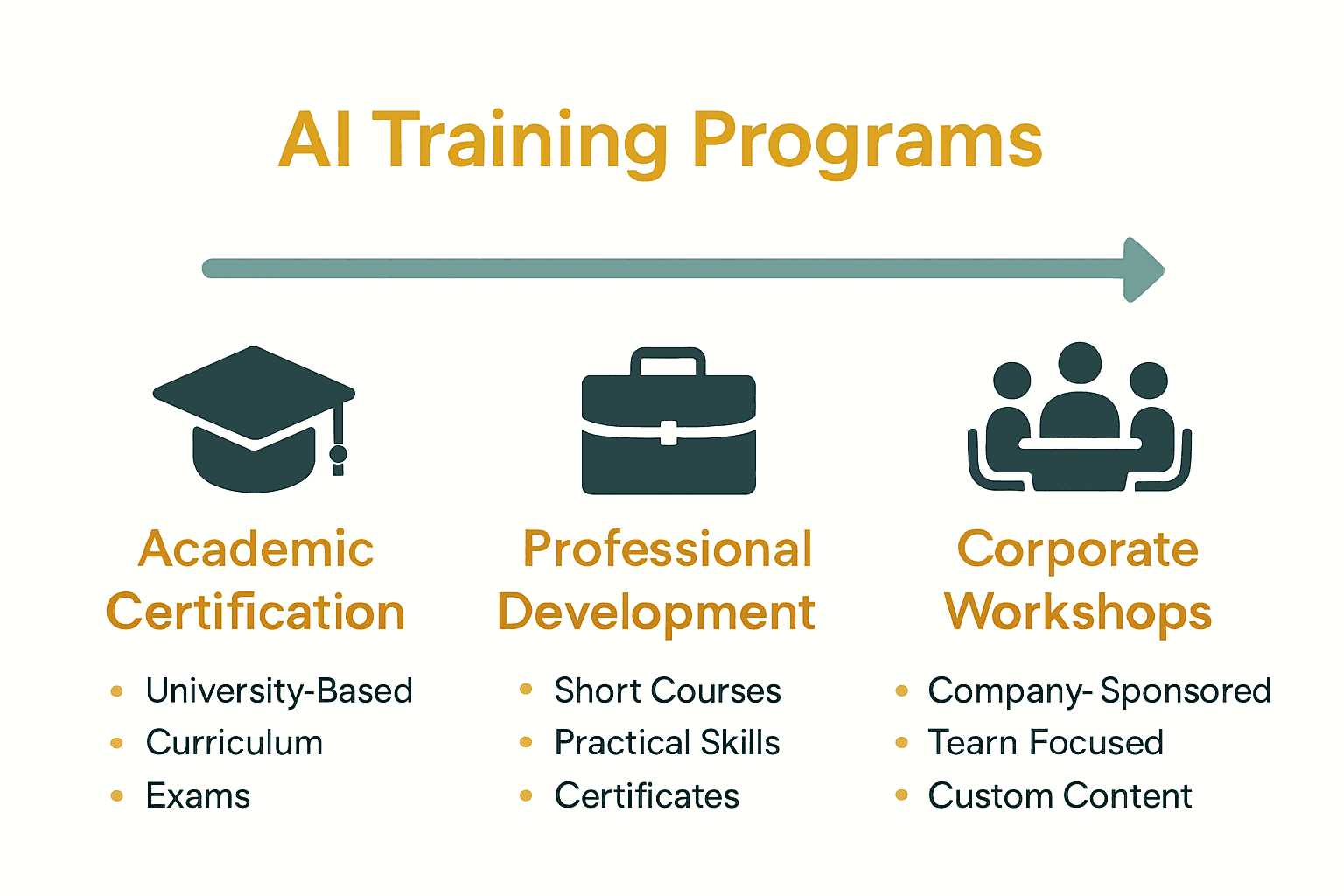
Professionals can choose from several primary training program categories, each designed to meet different skill levels and career objectives:
- Academic Certification Programs: Intensive academic tracks offering comprehensive theoretical and practical knowledge
- Professional Development Courses: Short-term, skill-focused training for working professionals
- Corporate Training Workshops: Customized programs targeting specific organizational technology needs
- Online Modular Courses: Flexible learning paths with self-paced modules
- Specialized Technical Bootcamps: Immersive, hands-on programming and AI skill development
Carnegie Mellon University offers another exceptional model with its 18-month specialized program in autonomous systems, emphasizing real-world project experience like developing self-driving cars and AI-driven robotics. These advanced programs demonstrate how modern AI training transcends traditional classroom learning, focusing on practical skills and innovative problem-solving.

For professionals looking to strategically navigate their AI learning journey, our guide on choosing AI courses for career success provides essential insights into selecting the right training pathway tailored to individual career goals and industry demands.
Career Advantages of AI Skill Development
Artificial Intelligence skills have become increasingly valuable in today’s rapidly evolving technology landscape, offering professionals unprecedented career opportunities across multiple industries. Udacity highlights the transformative potential of AI skill development through its career-focused Nanodegree programs, which emphasize real-world projects and mentorship designed to enhance job market competitiveness.
The career advantages of developing AI skills extend across multiple dimensions:
- Higher Salary Potential: AI professionals consistently earn top-tier compensation
- Cross-Industry Versatility: Skills applicable in technology, healthcare, finance, manufacturing
- Innovation Leadership: Positioning yourself at the forefront of technological transformation
- Problem-Solving Capabilities: Advanced analytical and computational thinking skills
- Global Career Opportunities: Demand for AI expertise spans international markets
Georgia Institute of Technology demonstrates another compelling pathway with its Online Master of Science in Computer Science, offering a specialized Machine Learning track that provides professionals with advanced AI credentials and enhanced career prospects. These programs underscore how strategic skill development can dramatically expand professional opportunities in an increasingly technology-driven world.
Professionals seeking to understand the comprehensive career landscape can explore our guide on why to choose AI as a career, which offers deeper insights into the exciting potential of AI skill development and career transformation.
Key Business Applications Across Industries
Artificial Intelligence is revolutionizing business practices across diverse sectors, offering transformative solutions that redefine operational efficiency and innovation. In the education sector, Artificial General Intelligence (AGI) demonstrates remarkable potential by creating intelligent tutoring systems that can adapt to individual student needs, providing personalized learning experiences and comprehensive feedback.
The key business applications of AI span multiple critical industries:
- Healthcare: Diagnostic imaging, personalized treatment planning, predictive patient care
- Finance: Fraud detection, algorithmic trading, risk assessment, customer service automation
- Manufacturing: Predictive maintenance, quality control, supply chain optimization
- Retail: Personalized recommendations, inventory management, customer behavior prediction
- Transportation: Autonomous vehicle development, route optimization, traffic management
Wikipedia’s research on Artificial Intelligence in Education further highlights how AI is transforming educational infrastructure through data-driven decision-making, emphasizing the critical considerations of AI ethics, data privacy, and AI literacy. These technological advancements demonstrate AI’s capacity to create intelligent, adaptive systems that can fundamentally reshape traditional business models.
Professionals seeking to understand the broader implications of data-driven technologies can explore our guide to applications of applied analytics, which offers deeper insights into how AI is revolutionizing business intelligence across various sectors.
Practical Considerations and Common Challenges
Navigating the AI landscape requires a nuanced understanding of both technological capabilities and potential limitations. Research on generative AI literacy emphasizes the critical importance of developing comprehensive competencies that extend beyond technical skills to include ethical and legal considerations, ensuring responsible and effective AI implementation.
The most prevalent challenges in AI skill development and deployment include:
- Data Quality and Bias: Ensuring representative and unbiased training datasets
- Ethical Considerations: Managing potential algorithmic discrimination
- Technical Complexity: Bridging skill gaps and maintaining technological currency
- Privacy and Security: Protecting sensitive information and maintaining data integrity
- Rapid Technological Evolution: Continuously updating skills and knowledge
Interdisciplinary research highlights the necessity of collaborative approaches in addressing AI challenges, particularly in developing robust frameworks that balance technological innovation with ethical considerations. The development of Artificial General Intelligence (AGI) requires careful navigation of complex interdisciplinary challenges, including data bias, fairness, and privacy protection.
Professionals seeking to develop a deeper understanding of AI implementation strategies can explore our guide on choosing AI courses for career success, which provides comprehensive insights into overcoming common challenges in AI skill development.
Elevate Your AI Career with Expert Training at Ambeone
The journey to mastering AI involves more than just technical knowledge. This article highlights crucial concepts like perception, reasoning, and ethical challenges, but many professionals struggle with how to apply these ideas practically in real-world settings. Common hurdles include bridging skill gaps, staying updated with rapid technological changes, and navigating AI’s complex ethical landscape. At Ambeone, we understand these challenges and offer tailored, instructor-led AI courses that focus on applied learning, business relevance, and career advancement.
Uncategorized Archives – Ambeone
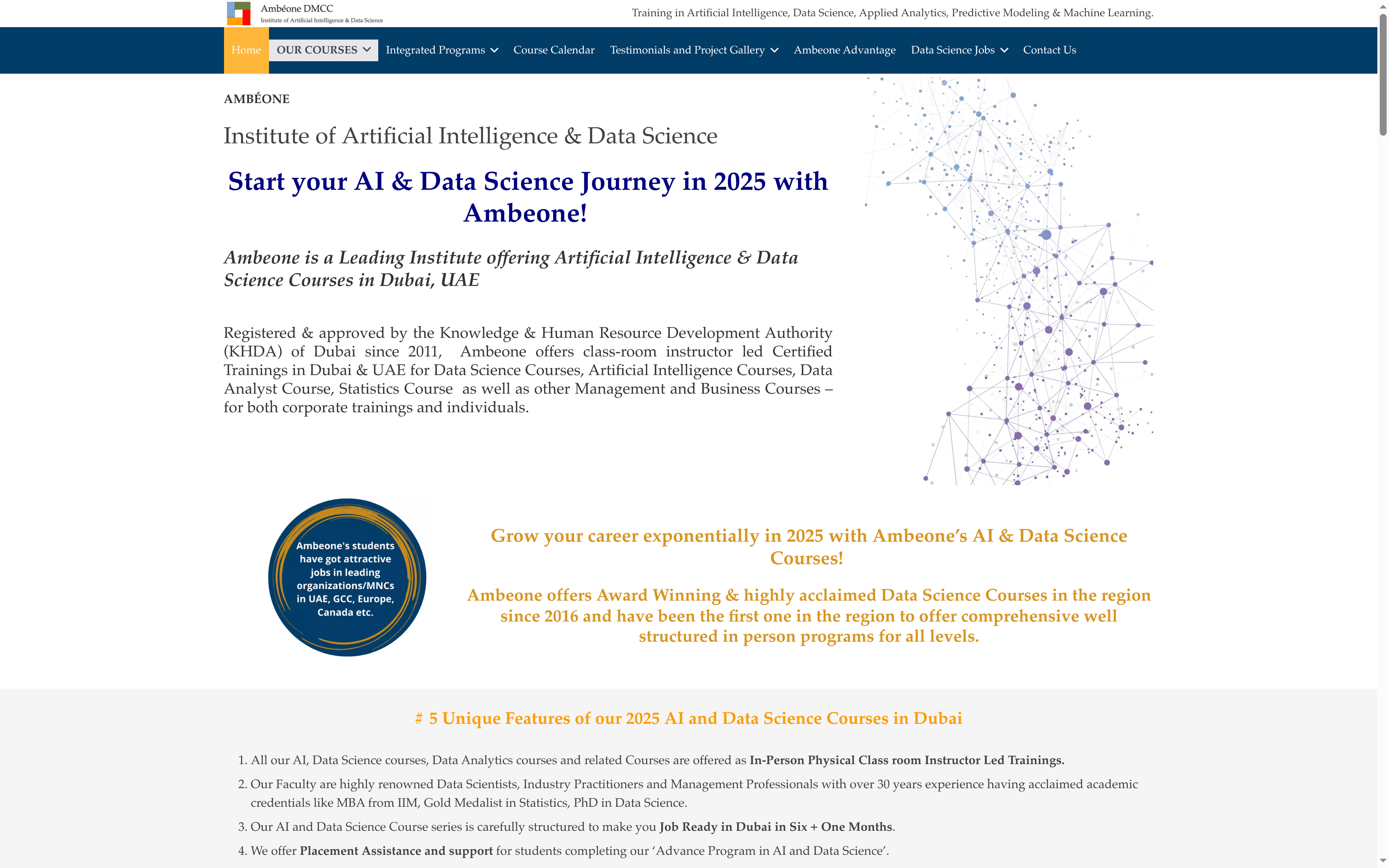
Take control of your future today by joining one of our comprehensive AI training programs designed specifically for professionals in Dubai and the UAE. Gain industry-relevant skills, earn recognized certifications, and learn from seasoned faculty who bring real-world experience. Do not wait to transform your career with practical knowledge and expert guidance. Visit us at Ambeone now to explore course offerings, access success stories, and start your journey toward becoming an AI expert.
Frequently Asked Questions
What is AI training?
AI training is the process of educating professionals and systems to understand, develop, and implement intelligent technologies, focusing on concepts such as perception, learning, and social impact.
What types of AI training programs are available?
AI training programs range from academic certification programs and professional development courses to corporate training workshops, online modular courses, and specialized technical bootcamps, catering to different skill levels and career goals.
What are the career advantages of developing AI skills?
Developing AI skills can lead to higher salary potential, cross-industry versatility, leadership in innovation, enhanced problem-solving capabilities, and global career opportunities in a tech-driven market.
What are common challenges in AI skill development?
Common challenges include ensuring data quality and bias, addressing ethical considerations, managing technical complexity, protecting privacy and security, and keeping up with rapid technological evolution.


