Applied Analytics Learning Pathway for Career Growth
Over half of American professionals aiming for analytics careers struggle to identify the right path for growth. The explosion of data-driven roles means knowing where you stand and what skills you need is more important than ever. By mapping out your current strengths, setting actionable goals, and selecting effective analytics training, you set yourself up for real advancement in a rapidly changing industry.
Table of Contents
- Step 1: Assess Current Skills And Set Analytics Goals
- Step 2: Select Relevant Applied Analytics Training Programs
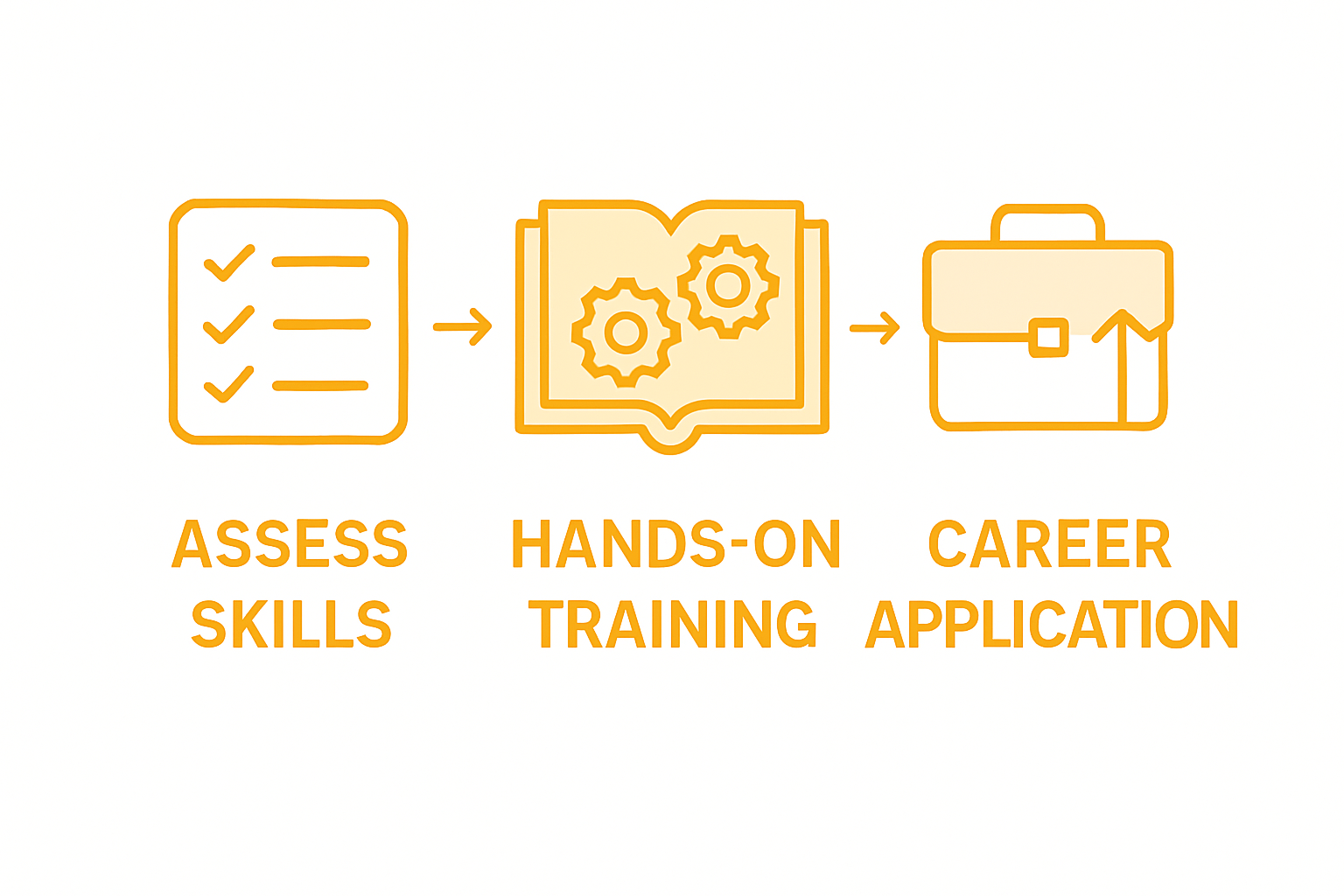
- Step 3: Engage In Hands-On Learning And Industry Projects
- Step 4: Complete Certification Requirements And Tests
- Step 5: Apply New Analytics Skills In Professional Settings
Quick Summary
| Key Point | Explanation |
|---|---|
| 1. Assess Your Current Skills | Conduct a thorough self-assessment to identify your analytical strengths and weaknesses across key areas. |
| 2. Set Specific Career Goals | Translate your skills assessment into measurable goals like achieving proficiency in programming languages within a set timeframe. |
| 3. Choose Relevant Training Programs | Research and select analytics training programs that align with your identified goals and offer hands-on experience through projects. |
| 4. Gain Hands-On Experience | Seek real-world projects, internships, or hackathons to apply your theoretical knowledge and build a strong skill portfolio. |
| 5. Complete Certification Requirements | Follow a structured plan to finish coursework and successfully pass certification exams, enhancing your qualifications for job opportunities. |
Step 1: Assess Current Skills and Set Analytics Goals
Before diving into an applied analytics learning pathway, you need a clear understanding of your current analytical capabilities and strategic career goals. This critical first step helps you create a targeted, personalized development roadmap that aligns with your professional objectives.
Start by conducting a comprehensive self assessment of your existing analytics skills. Map out your current competencies across key areas like statistical analysis, data visualization, programming languages, and machine learning techniques. Systematic skill evaluation methods recommend creating a detailed skills matrix that highlights your strengths and identifies potential knowledge gaps. Consider using a rating scale from beginner to advanced for each technical skill and methodological approach.
Next, translate your skills assessment into specific, measurable career development goals. Ask yourself strategic questions like what roles you want to target, which industries intrigue you, and what analytical problems you want to solve. Your goals should be specific quantitative targets rather than vague aspirations. For instance, instead of saying “I want to improve my data skills,” set a concrete objective like “Become proficient in Python data analysis within six months” or “Complete three machine learning project portfolios by year end.”
Pro tip: Document your skill assessment and goals in a digital tracking system or spreadsheet. This provides a living document you can continuously update as you progress through your applied analytics learning journey.
Step 2: Select Relevant Applied Analytics Training Programs
With a clear assessment of your current skills and career goals, you are now ready to select analytics training programs that precisely match your professional development needs. This critical step requires strategic evaluation of available educational resources to maximize your learning potential.

Research comprehensive analytics programs that offer hands-on experience with practical data analysis techniques. Look for training that covers essential technical skills such as database systems, data mining tools, programming languages, and data visualization packages. Prioritize programs that provide real-world case studies and project based learning, which allow you to apply theoretical knowledge to practical scenarios. Consider factors like curriculum depth, instructor expertise, industry connections, and opportunities for practical application.
When evaluating potential training programs, create a systematic comparison matrix that scores each option across multiple dimensions. Key evaluation criteria should include course content alignment with your career goals, instructor qualifications, learning format (online, in person, hybrid), program duration, cost, certification opportunities, and potential for networking. Pay special attention to programs offering specialized tracks in your target industry or analytical domain, such as business intelligence, machine learning, or predictive analytics.
Pro tip: Attend information sessions, webinars, or speak directly with program alumni to gain insider perspectives on the training quality and practical value of different analytics educational offerings.
Step 3: Engage in Hands-On Learning and Industry Projects
Transitioning from theoretical knowledge to practical application is crucial in your applied analytics learning journey. This step focuses on gaining real world experience that transforms academic concepts into marketable professional skills.
Experiential learning through practical tools and real world datasets becomes your primary strategy for skill development. Seek out opportunities that allow you to work on authentic industry projects, internships, and collaborative research initiatives. Look for programs and platforms that provide hands on experience with complex data challenges, enabling you to apply statistical techniques, programming skills, and analytical thinking to solve actual business problems. Consider participating in data hackathons, joining open source projects, or contributing to community driven analytics initiatives that offer structured learning environments.
Develop a systematic approach to building your practical experience portfolio. Start by creating personal analytics projects that demonstrate your technical capabilities. Choose datasets from public repositories or real world sources that align with your career interests. Focus on projects that showcase your ability to extract meaningful insights, develop predictive models, and communicate complex analytical findings. Document your projects meticulously, including methodology, challenges encountered, and solutions implemented. These detailed project descriptions will serve as powerful evidence of your practical skills during future job interviews.
Pro tip: Create a GitHub repository to showcase your analytics projects, allowing potential employers to directly review your technical capabilities and problem solving approach.
Step 4: Complete Certification Requirements and Tests
The final stage of your applied analytics learning pathway involves strategically completing certification requirements that validate your professional skills and enhance your career marketability. This critical phase transforms your learning into recognized credentials that employers value.
Graduate level certification programs typically require comprehensive coursework and rigorous assessments that demonstrate your technical proficiency. Carefully review the specific requirements for your chosen certification track, which often involve completing a set number of credit hours covering essential analytical techniques such as data preparation, programming, visualization, and ethical communication. Create a structured study plan that systematically addresses each program requirement, tracking your progress and ensuring you meet all academic and technical standards.
Prepare for certification tests by developing a multifaceted study strategy that combines theoretical knowledge with practical application. Utilize practice exams, study guides, and interactive learning resources to build comprehensive understanding. Focus on mastering core competencies across different analytical domains, including statistical analysis, machine learning techniques, data visualization, and programming skills. Document your learning process, maintain detailed notes, and seek opportunities for peer study groups or mentorship that can provide additional insights and support during your certification journey.
Pro tip: Schedule your certification exam during a period when you have minimal professional commitments, allowing you to dedicate focused time and mental energy to your preparation and performance.
Step 5: Apply New Analytics Skills in Professional Settings
Transitioning your newly acquired analytics skills from academic learning to professional application requires strategic planning and confident execution. This crucial stage transforms theoretical knowledge into tangible workplace value that sets you apart in competitive professional environments.
Master data analytics tools for solving real world institutional challenges by identifying opportunities within your current workplace or target industry. Start by conducting an internal assessment of existing analytical processes, looking for potential improvements or data driven solutions that can demonstrate your newfound expertise. Approach your current manager or team leader with specific recommendations that leverage your analytics skills, showing how data analysis can drive more informed decision making, optimize operational efficiency, or uncover previously hidden business insights.
Develop a strategic implementation approach that gradually introduces your analytical capabilities. Begin with smaller, low risk projects that showcase your ability to transform raw data into meaningful insights. Document your process meticulously, highlighting the methodology you used, challenges you overcame, and the specific business value generated by your analytical approach. Create visual presentations that clearly communicate complex analytical findings in a way that non technical stakeholders can easily understand. Focus on translating technical analysis into actionable business recommendations that demonstrate the direct impact of your skills.
Pro tip: Build a portfolio of professional analytics projects that illustrate your ability to solve real world business problems, using concrete examples that potential employers can immediately recognize as valuable.
Elevate Your Career with Applied Analytics Training Tailored for Growth
The journey to mastering applied analytics can be challenging when you face skill gaps and unclear career pathways. This article highlighted the importance of assessing your current abilities, setting clear goals, gaining hands-on experience, and obtaining certifications to stand out in the competitive data-driven job market. If you are ready to bridge these gaps and accelerate your professional growth, explore hands-on, instructor-led courses designed to develop your expertise in business intelligence, machine learning, and data analysis.
Discover comprehensive in-person training programs at Ambeone, the leading educational platform in Dubai and the UAE specializing in Artificial Intelligence and Data Science. Gain real-world skills with courses crafted for practical application that align perfectly with your career objectives. Visit our Uncategorized Archives – Ambeone to explore all upcoming trainings, and take the first step toward transforming your analytics capabilities into recognized professional credentials today.
Frequently Asked Questions
How can I assess my current analytics skills?
To assess your current analytics skills, conduct a comprehensive self-assessment that evaluates your proficiency in areas like statistical analysis, programming, and data visualization. Create a skills matrix and rate yourself on a scale from beginner to advanced, highlighting your strengths and identifying knowledge gaps.
What steps should I take to set my analytics career goals?
Start by defining specific, measurable career development goals based on your self-assessment. Ask yourself what roles you want to target and what analytical problems you aim to solve, then establish concrete objectives like “Become proficient in Python data analysis within six months”.
How do I select the right applied analytics training programs?
Select training programs by researching comprehensive options that offer hands-on experience and cover essential technical skills. Create a comparison matrix to evaluate program criteria such as course content, instructor qualifications, and practical application opportunities.
What types of hands-on learning experiences should I pursue?
Engage in hands-on learning by participating in industry projects, internships, and data hackathons that allow you to apply your analytical skills to real-world challenges. Aim to build a diverse portfolio through personal analytics projects that demonstrate your capabilities and problem-solving skills.
How can I effectively prepare for certification tests in analytics?
To prepare for certification tests, develop a structured study plan that incorporates theoretical knowledge with practical application. Utilize practice exams and study guides to master core competencies, and consider forming study groups for additional support and insights.
What strategies can I use to apply new analytics skills in my job?
Identify opportunities within your current workplace to utilize your analytics skills, focusing on small projects that can demonstrate your abilities. Document your processes and results to highlight the tangible business value generated by your analytical approach.
Recommended
- How to Select Analytics Course for Career Growth
- The Essential Guide to the Role of Applied Analytics
- What Is Data Analytics? Complete Guide Explained – Ambeone
- Applied Analytics Explained: Key Concepts and Uses
- Understanding the Importance of Continuous Learning – My WordPress
- Playlist Analytics Workflow: Complete Industry Guide – Blog – Music24.com