
Predictive analytics explained: definitions, techniques, types, and real-world applications for professionals and businesses in AI and data science.
Predictive Analytics: Driving Data-Backed Business Decisions
Predictive Analytics: Driving Data-Backed Business Decisions
Most American businesses now depend on predictive analytics to shape important decisions, and experts report that over 80 percent of American companies actively use these tools to forecast trends and reduce risks. In a landscape driven by massive data, understanding predictive analytics is crucial for anyone seeking a strategic edge. Whether you work in finance, healthcare, retail, or technology, mastering these core concepts opens new possibilities for anticipating challenges and making smarter moves based on proven insights.
Table of Contents
- Defining Predictive Analytics And Core Concepts
- Types Of Predictive Analytics Methods Explained
- How Predictive Analytics Works In Practice
- Business Applications And Industry Use Cases
- Risks, Limitations, And Best Practices
Key Takeaways
| Point | Details |
|---|---|
| Predictive Analytics Definition | Predictive analytics transforms historical data into actionable insights using statistical algorithms and machine learning. |
| Methodological Diversity | Various methods such as regression analysis, decision trees, and neural networks enhance forecasting capabilities across industries. |
| Industry Applications | Businesses utilize predictive analytics for risk assessment, customer behavior prediction, and optimizing operations across multiple sectors. |
| Challenges and Best Practices | Organizations must address model interpretability and concept drift while implementing robust validation and ethical data practices. |
Defining Predictive Analytics and Core Concepts
Predictive analytics represents a sophisticated approach to data analysis that transforms raw historical information into actionable future insights. By leveraging advanced statistical algorithms and machine learning techniques, businesses can now move beyond traditional descriptive reporting and anticipate potential outcomes with remarkable precision. Predictive modeling techniques enable organizations to identify patterns, forecast trends, and make strategic decisions based on comprehensive data interpretations.
At its core, predictive analytics involves extracting meaningful information from existing datasets to predict future probabilities and behaviors. This process typically encompasses several critical stages, including data collection, statistical analysis, machine learning algorithm development, and predictive modeling. Professionals utilize various techniques such as regression analysis, decision trees, neural networks, and time series forecasting to generate accurate predictions across multiple business domains.
The practical applications of predictive analytics span numerous industries, from financial services and marketing to healthcare and manufacturing. Businesses can leverage these insights to optimize inventory management, predict customer purchasing behaviors, assess potential risks, and develop targeted marketing strategies. By transforming complex data into strategic foresight, predictive analytics empowers decision makers to proactively address challenges, allocate resources more efficiently, and gain a competitive edge in increasingly data driven markets.
Key characteristics of effective predictive analytics include robust data quality, sophisticated algorithmic models, continuous learning mechanisms, and the ability to translate statistical findings into practical business recommendations. Organizations that successfully implement predictive analytics can expect improved operational efficiency, enhanced customer experiences, and more informed strategic planning.
Types of Predictive Analytics Methods Explained
Predictive analytics encompasses a diverse range of sophisticated methodological approaches designed to generate accurate forecasts and insights across various business domains. Machine learning algorithms play a pivotal role in transforming complex datasets into actionable predictive models, enabling organizations to make data driven strategic decisions with increased confidence and precision.
Several core predictive analytics methods stand out for their unique capabilities and application scenarios. Decision trees provide intuitive visual representations of potential outcomes, allowing analysts to map potential paths and probabilities. Regression analysis helps identify relationships between variables, enabling precise linear predictions. Neural networks offer advanced pattern recognition capabilities, simulating complex cognitive processes to uncover nuanced insights that traditional statistical methods might overlook. Predictive modeling techniques such as random forests and support vector machines further enhance analytical capabilities by combining multiple algorithmic approaches.

Each predictive analytics method carries distinct strengths and limitations, making method selection critical to achieving accurate results. Decision trees excel in interpretability and handling categorical data, while neural networks shine in processing unstructured information like images and text. Regression models remain powerful for linear relationships, and ensemble methods like random forests can mitigate individual model weaknesses by aggregating multiple predictive strategies.
Businesses leveraging these advanced predictive analytics techniques can unlock transformative insights across multiple domains. From financial risk assessment and customer behavior prediction to healthcare diagnostics and supply chain optimization, the strategic application of these methods empowers organizations to anticipate trends, mitigate potential challenges, and develop proactive, data informed strategies that drive competitive advantage.
How Predictive Analytics Works in Practice
The practical implementation of predictive analytics involves a sophisticated, multi stage process that transforms raw data into actionable strategic insights. Integrated predictive modeling frameworks demonstrate how organizations systematically extract meaningful patterns and forecast potential outcomes by leveraging advanced statistical techniques and machine learning algorithms. This methodical approach enables businesses to move beyond reactive decision making and proactively anticipate future trends and challenges.
The operational workflow of predictive analytics typically encompasses several critical stages. First, data collection and preprocessing involve gathering relevant datasets, cleaning inconsistent information, and preparing high quality input for analytical models. Next, feature selection and engineering help identify the most significant variables that can predict future outcomes. Machine learning algorithms then analyze these curated datasets, developing complex mathematical models that can recognize intricate patterns and relationships invisible to traditional analytical methods.
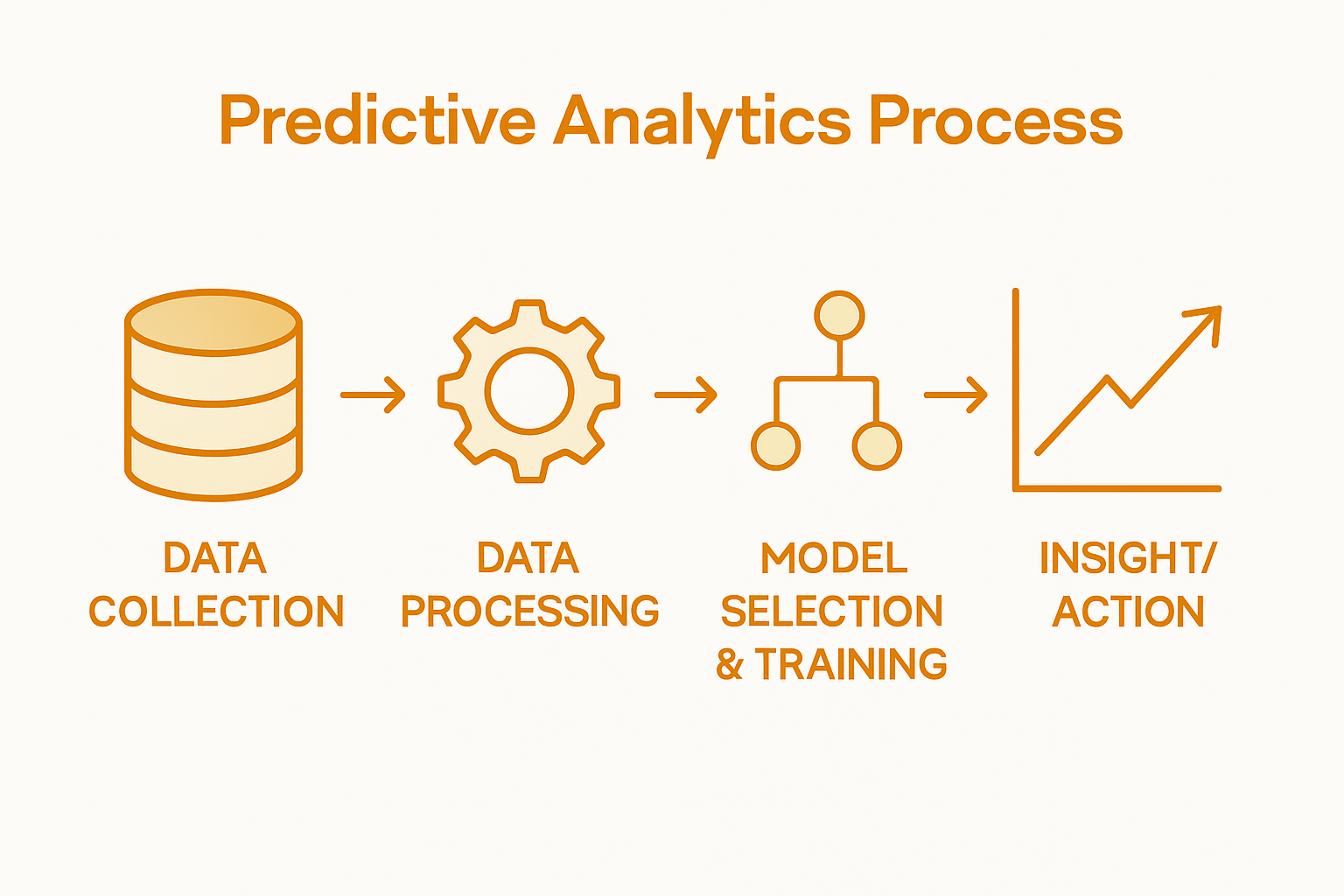
Unified predictive modeling approaches enable organizations to develop more interpretable and robust analytical frameworks. Businesses can validate these predictive models through rigorous testing, comparing predicted outcomes against actual results to continuously refine their analytical capabilities. This iterative process allows for progressive improvement, ensuring that predictive models become increasingly accurate and reliable over time. Advanced techniques like cross validation, ensemble modeling, and statistical significance testing further enhance the precision and dependability of predictive analytics solutions.
The practical applications of these methodologies span virtually every industry imaginable. Financial institutions use predictive analytics to assess credit risks and detect potential fraud, while healthcare organizations leverage these techniques to predict patient outcomes and optimize treatment protocols. Retailers employ predictive models to forecast consumer behavior and optimize inventory management, and manufacturing companies utilize these insights to predict equipment maintenance needs and prevent potential system failures. By transforming complex data into strategic foresight, predictive analytics empowers decision makers to navigate increasingly complex business landscapes with greater confidence and precision.
Business Applications and Industry Use Cases
Predictive analytics has emerged as a transformative tool across diverse industries, enabling organizations to make data driven decisions with unprecedented precision and insight. Uplift modeling techniques demonstrate how businesses can strategically assess the incremental impact of specific actions on individual customer behaviors, revolutionizing approaches to targeted marketing and personalized engagement strategies.
In the financial sector, predictive analytics plays a crucial role in risk assessment, fraud detection, and investment strategies. Banks and insurance companies leverage advanced algorithms to evaluate credit risks, predict potential defaults, and develop more accurate pricing models. Healthcare organizations utilize these techniques to optimize patient care, predict potential disease outbreaks, and improve treatment protocols. Retailers apply predictive models to forecast consumer purchasing patterns, optimize inventory management, and create personalized marketing campaigns that significantly enhance customer experience.
Educational predictive analytics approaches have shown remarkable potential in improving student outcomes and institutional performance. By analyzing historical academic data, educational institutions can identify at risk students, develop targeted intervention strategies, and create more personalized learning experiences. Manufacturing and logistics industries leverage predictive maintenance techniques to anticipate equipment failures, optimize maintenance schedules, and reduce operational downtime. Technology companies use predictive analytics to enhance cybersecurity measures, detect potential system vulnerabilities, and develop more robust security protocols.
The versatility of predictive analytics extends beyond traditional business domains. Agricultural organizations use these techniques to predict crop yields and optimize farming practices. Energy companies employ predictive models to forecast demand, optimize grid performance, and develop more sustainable energy distribution strategies. Government agencies utilize predictive analytics for urban planning, resource allocation, and public service optimization. As technology continues to evolve, the potential applications of predictive analytics seem boundless, offering organizations unprecedented insights into complex systems and human behaviors.
Risks, Limitations, and Best Practices
Predictive analytics, while powerful, presents several significant challenges that organizations must carefully navigate to ensure reliable and ethical implementation. Machine learning model interpretability emerges as a critical concern, highlighting the importance of developing transparent analytical approaches that can be understood and validated by stakeholders across different organizational levels. The complexity of predictive models often creates a “black box” effect, where decision making processes become opaque and difficult to comprehend.
Concept drift represents another substantial challenge in predictive analytics, where statistical properties of target variables change over time, potentially undermining the accuracy and reliability of predictive models. Organizations must implement robust monitoring and adaptation strategies to maintain model performance. Key best practices include regularly retraining models, establishing comprehensive validation protocols, and developing dynamic algorithms capable of detecting and responding to evolving data patterns. Privacy and ethical considerations also demand rigorous attention, requiring organizations to implement stringent data protection measures and ensure algorithmic fairness.
To mitigate potential risks, businesses should adopt a holistic approach to predictive analytics implementation. This involves creating cross functional teams that combine data science expertise with domain specific knowledge, establishing clear governance frameworks, and maintaining a culture of continuous learning and model refinement. Technical best practices include implementing comprehensive data quality checks, using ensemble modeling techniques to improve prediction reliability, and developing transparent documentation that explains model methodologies and potential limitations.
Successful predictive analytics strategies require a balanced approach that acknowledges both technological capabilities and inherent limitations. Organizations must invest in ongoing training, maintain realistic expectations about predictive model performance, and create flexible frameworks that can adapt to changing business environments. By understanding potential risks, implementing robust validation processes, and maintaining a commitment to ethical data use, businesses can harness the transformative power of predictive analytics while mitigating potential drawbacks and maintaining stakeholder trust.
Master Predictive Analytics to Transform Your Business Decisions
Predictive analytics enables businesses to anticipate future trends, optimize operations, and make confident data backed decisions. Yet many professionals struggle to harness complex concepts like machine learning algorithms, regression analysis, and predictive modeling effectively. If you want to overcome these challenges and apply predictive analytics with precision, targeted training is essential.
Unlock your potential with expert led courses at Ambeone designed to deepen your understanding of predictive analytics and its real world applications. Explore practical skill development in advanced data science techniques through our Uncategorized Archives – Ambeone and comprehensive training programs. Act today to gain hands on experience, industry relevant knowledge, and certification that positions you as a leader in Dubai and the UAE’s growing AI and data science sector.
Visit Ambeone now to take the first step toward mastering predictive analytics and driving impactful, data informed business strategies.
Frequently Asked Questions
What is predictive analytics?
Predictive analytics is a data analysis approach that uses historical data and advanced statistical algorithms to anticipate future outcomes and behaviors, enabling organizations to make informed strategic decisions.
How does predictive analytics work in practice?
The process of predictive analytics involves stages such as data collection, preprocessing, feature selection, and the application of machine learning algorithms to develop models that recognize patterns and forecast potential outcomes.
What are the types of predictive analytics methods?
Common predictive analytics methods include decision trees, regression analysis, neural networks, and ensemble methods like random forests. Each has its strengths and applications depending on the complexity of the data and the specific insights needed.
What are some business applications of predictive analytics?
Predictive analytics is used across various industries, including finance for risk assessment, healthcare for predicting patient outcomes, retail for forecasting customer purchasing patterns, and manufacturing for optimizing maintenance schedules.