
Why pursue AI certification? Learn about certification types, career impact, business relevance, costs, and risks for professionals and teams in Dubai.
Why Pursue AI Certification: Career Growth and Value
Why Pursue AI Certification: Career Growth and Value
Over 60 percent of American professionals say they feel unsure about which AI certifications truly matter. The rapid growth of artificial intelligence has left many talented workers questioning the real value of these credentials. Clarifying common myths and understanding the facts can empower you to make smarter decisions about career advancement and skill development in a changing job market.
Table of Contents
- AI Certification Explained And Common Myths
- Types Of AI Certifications And Focus Areas
- Career Benefits For Professionals And Switchers
- AI Certification For Teams And Enterprises
- Costs, Risks, And Choosing The Right Program
Key Takeaways
| Point | Details |
|---|---|
| AI Certifications Validate Expertise | AI certifications provide specialized skills that enhance job prospects across various industries beyond traditional tech roles. |
| Diverse Certification Options Available | Professionals can select from foundational, intermediate, and advanced certifications tailored to specific skill sets and career goals. |
| Significant Career Benefits | AI certifications can lead to higher salaries, career mobility, and improved marketability in a tech-driven job market. |
| Strategic Selection is Key | Carefully evaluate certification programs based on industry recognition, curriculum relevance, and instructor expertise before enrolling. |
AI Certification Explained and Common Myths
AI certification represents a strategic credential for professionals seeking to validate their expertise in artificial intelligence technologies. Unlike generic technology training, these certifications provide concrete evidence of specialized skills that employers actively seek. Misconceptions about AI capabilities and certification value frequently prevent talented individuals from pursuing these critical professional credentials.
Most AI certification programs cover essential domains including machine learning, neural networks, statistical analysis, and practical implementation strategies. These comprehensive programs go beyond theoretical knowledge, emphasizing hands-on skills that translate directly into workplace performance. Professionals can choose from various certification levels ranging from foundational understanding to advanced specialist tracks, allowing customized learning pathways aligned with individual career objectives.
Contrary to popular belief, AI certifications are not exclusively for software engineers or data scientists. Emerging research on AI certification myths reveals that professionals from marketing, finance, healthcare, and management can significantly benefit from understanding AI technologies. These credentials demonstrate an individual’s commitment to technological literacy and adaptability in an increasingly automated professional landscape.
The certification landscape includes multiple recognized programs such as vendor-specific credentials from technology companies and independent professional certifications. Each program offers unique strengths, focusing on different aspects of AI implementation and theoretical foundations. Professionals should carefully evaluate certification requirements, curriculum depth, and industry recognition before selecting a specific program.
Pro Tip: Research Strategically: Before investing in an AI certification, connect with professionals in your industry, review job descriptions, and identify which specific certifications carry the most weight in your desired career path.
Types of AI Certifications and Focus Areas
AI certifications have evolved into specialized credentials targeting distinct technological domains and professional skill sets. Comprehensive certification options span multiple complexity levels and professional requirements, enabling professionals to select programs aligned with their career objectives and technological expertise.

The primary categories of AI certifications include foundational, intermediate, and advanced tracks. Foundational certifications typically cover basic machine learning concepts, programming fundamentals, and introductory statistical analysis. Intermediate certifications dive deeper into neural networks, advanced algorithmic design, and practical implementation strategies across industries like finance, healthcare, and technology. Advanced certifications focus on specialized domains such as deep learning, natural language processing, computer vision, and complex AI system architecture.
Most AI certification programs can be categorized into several key focus areas:
- Machine Learning Certifications: Emphasizing predictive modeling, statistical learning, and algorithmic design
- Data Science Certifications: Integrating AI techniques with statistical analysis and data visualization
- Deep Learning Certifications: Concentrating on neural network architectures and advanced computational techniques
- AI Ethics and Governance Certifications: Addressing responsible AI development and implementation
- Cloud AI Certifications: Focusing on AI deployment and management within cloud infrastructure
Professionals should carefully evaluate certification programs based on their industry requirements, technological specialization, and long-term career goals. Some certifications are vendor-specific, while others provide vendor-neutral, comprehensive training that demonstrates broad technological competence.
Here’s a comparison of foundational, intermediate, and advanced AI certification tracks:
| Certification Level | Typical Skill Focus | Career Fit | Example Outcomes |
|---|---|---|---|
| Foundational | Basic programming, ML concepts | Entry-level professionals | Entry into tech roles |
| Intermediate | Neural networks, applied algorithms | Career advancement | Sector-specific AI application |
| Advanced | Deep learning, AI system design | Specialists, leaders | AI architect, research roles |
Pro Tip: Strategic Selection: Research certification programs by reviewing their curriculum, checking instructor credentials, and verifying industry recognition before committing to a specific training pathway.
Career Benefits for Professionals and Switchers
Emerging AI certifications offer transformative career opportunities for professionals across diverse industries. These credentials provide a strategic pathway for career advancement, enabling individuals to transition into high-demand technological roles or enhance their existing professional skill sets. The AI certification landscape has evolved to accommodate professionals from varied backgrounds, creating accessible entry points into cutting-edge technological domains.
The career benefits of AI certifications extend across multiple professional dimensions. Career Switchers can leverage these credentials to demonstrate technical competence and bridge skill gaps, making significant transitions from traditional roles into technology-driven positions. Existing Professionals can use AI certifications to enhance their marketability, negotiate higher salaries, and position themselves as innovative leaders within their current organizations. The certifications serve as tangible evidence of specialized knowledge, significantly improving employment prospects and professional credibility.
Key career advantages of AI certifications include:
- Salary Enhancement: Certified professionals typically command 20-40% higher compensation
- Career Mobility: Increased opportunities across industries like finance, healthcare, technology, and marketing
- Skill Validation: Objective proof of technical expertise and continuous learning commitment
- Networking Opportunities: Access to professional communities and industry-specific connections
- Global Recognition: Credentials respected by international employers and technology leaders
Professionals should strategically select certifications aligned with their career goals, considering factors like industry demand, technological specialization, and long-term career trajectory. The most successful candidates approach AI certification as a continuous learning journey, constantly updating their skills to remain competitive in a rapidly evolving technological landscape.
Pro Tip: Strategic Investment: Research job market trends, consult industry professionals, and select AI certifications that demonstrate both technical proficiency and strategic thinking to maximize your career potential.
AI Certification for Teams and Enterprises
Advanced AI certifications play a critical role in enterprise risk management and technological transformation, offering organizations structured pathways to develop comprehensive technological capabilities. Enterprise-level AI certification programs represent strategic investments that enable companies to systematically upgrade their technological infrastructure, align workforce skills with emerging industry demands, and maintain competitive technological positioning.
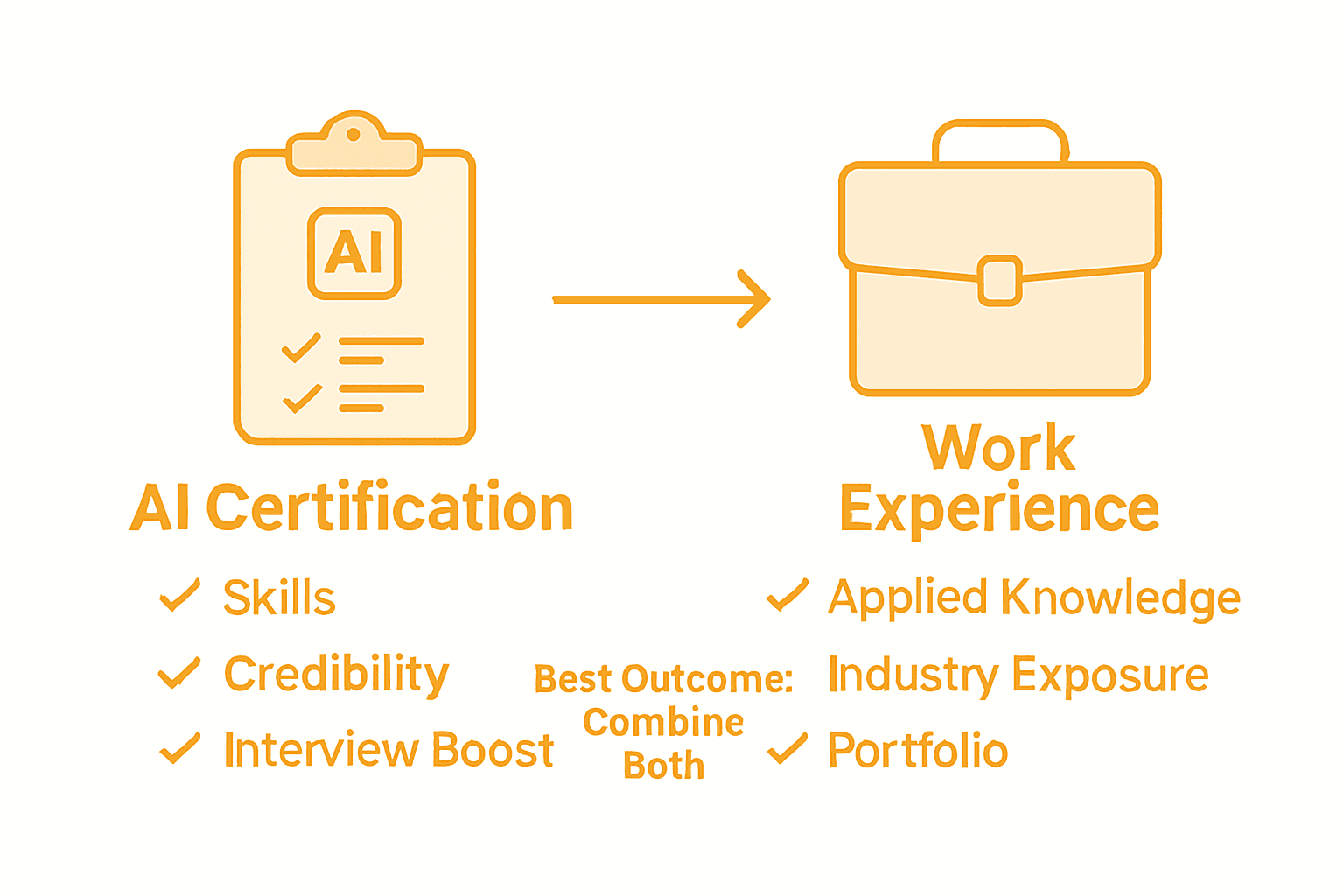
Team-based AI certification approaches provide multiple strategic advantages for organizations. Corporate Training Programs can leverage these certifications to create standardized skill benchmarks, ensuring consistent technological competence across different departments and professional levels. By implementing structured AI certification frameworks, enterprises can develop internal talent pipelines, reduce external recruitment costs, and create a culture of continuous technological learning and adaptation.
Key benefits of enterprise AI certification strategies include:
- Organizational Skill Alignment: Synchronizing technological capabilities across multiple teams and departments
- Risk Mitigation: Developing standardized approaches to AI implementation and governance
- Talent Development: Creating internal career progression pathways for existing employees
- Competitive Advantage: Building proprietary technological expertise unique to the organization
- Compliance Readiness: Ensuring workforce skills meet emerging industry and regulatory standards
Successful enterprise AI certification programs require strategic planning, including comprehensive needs assessment, customized curriculum development, and ongoing skill evaluation. Organizations must approach these initiatives as long-term investments in human capital, focusing on creating adaptable, technologically fluent professional environments that can quickly respond to emerging technological challenges.
Pro Tip: Holistic Implementation: Design AI certification programs that balance technical skill development with broader strategic thinking, ensuring your team develops not just technological competence but also the ability to drive meaningful organizational innovation.
Costs, Risks, and Choosing the Right Program
Navigating the complex landscape of AI certification requires a strategic approach that balances financial investment, professional development potential, and long-term career impact. Professionals must carefully evaluate multiple dimensions beyond simple price points, considering factors such as curriculum depth, instructor expertise, industry recognition, and potential return on investment.
Certification Cost Structures typically range from affordable online programs starting at $300 to comprehensive enterprise-level training packages costing several thousand dollars. These costs vary significantly based on program complexity, delivery format, and institutional reputation. Key Cost Considerations include:
- Tuition and enrollment fees
- Study materials and resource access
- Potential examination expenses
- Supplementary preparation resources
- Potential recertification requirements
Risks associated with AI certification investments extend beyond monetary considerations. Professionals must assess potential challenges including:
- Curriculum Relevance: Ensuring program content aligns with current technological standards
- Skill Transferability: Verifying certification’s applicability across different industry sectors
- Time Commitment: Balancing training requirements with existing professional responsibilities
- Technology Obsolescence: Selecting programs with adaptive, forward-looking curriculum
- Credibility Verification: Confirming program accreditation and industry recognition
Successful program selection requires comprehensive research, including analyzing instructor credentials, reviewing curriculum details, exploring alumni success stories, and understanding specific certification outcomes. Professionals should prioritize programs offering practical, hands-on experience and demonstrable skill development over purely theoretical approaches.
The following table summarizes the primary cost and selection factors for AI certification programs:
| Consideration | Why It Matters | Example Questions to Ask |
|---|---|---|
| Tuition Fees | Impacts total investment | Is financial aid available? |
| Industry Recognition | Determines employer acceptance | Is the certification widely respected? |
| Curriculum Relevance | Ensures skills meet job needs | Does the content fit your career? |
| Instructor Expertise | Influences training quality | Are instructors experienced experts? |
Pro Tip: Strategic Evaluation: Conduct informational interviews with recent program graduates, review job market trends, and assess your specific career goals before committing to any AI certification program.
Unlock Your AI Career Potential with Expert-Led Certification Training
The journey to AI certification is filled with challenges like choosing the right program, validating your skills, and making a strategic career move that truly delivers value. This article highlights crucial pain points such as curriculum relevance, industry recognition, and practical skill application that you cannot ignore if you want to stand out in today’s competitive job market. By mastering AI concepts like machine learning and deep learning through recognized certification, you not only enhance your marketability but also secure higher salary prospects and career mobility.
Discover how AmbeOne transforms these challenges into opportunities by offering in-person instructor-led training programs designed specifically for professionals in Dubai and the UAE aiming to grow in AI and Data Science careers. Our courses emphasize practical, industry-aligned knowledge delivered by experienced faculty who understand local career dynamics. Whether you are a career switcher or an existing professional seeking advancement, AmbeOne’s AI certification courses provide a proven pathway to solidify your skills and gain global recognition.
Take the next step to future-proof your career with trusted AI certification training.
Ready to bridge the gap between learning and career success Choose AmbeOne today to access detailed course structures, expert instructors, and powerful certification support. Visit our site now to start your journey to becoming a certified AI professional with confidence.
Frequently Asked Questions
What are the benefits of pursuing AI certification?
AI certification enhances career prospects by validating your technical skills, leading to potential salary increases, career mobility, and improved marketability in various industries.
Who can benefit from AI certification?
AI certification is beneficial not only for software engineers and data scientists but also professionals in marketing, finance, healthcare, and management sectors who want to enhance their understanding of AI technologies.
How do I choose the right AI certification program?
When selecting an AI certification program, consider factors such as curriculum depth, instructor expertise, industry recognition, and how well it aligns with your career goals and industry demands.
What types of skills do AI certification programs typically cover?
AI certification programs cover a range of skills including machine learning concepts, neural networks, data science applications, deep learning techniques, AI ethics, and cloud AI deployment strategies.